


A ligature only works if it fits your mouthpiece. Too loose and it slips or won't hold the reed evenly; too tight and it won't go on at all. Hard-rubber mouthpieces are fairly standard, but metal mouthpieces vary a lot between brands and models, which is why many ligatures, including the KUNO ligatures we carry, come in two sizes for metal mouthpieces: S (small) and M (medium).
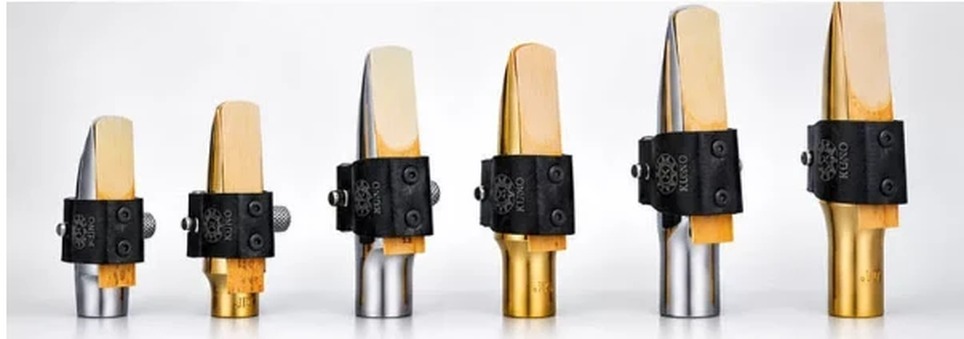
Metal mouthpieces come in many sizes and shapes, so one ligature can't fit them all.
Here is how to work out which one you need in about a minute.
Step 1: Know your instrument
Ligatures and caps are made for one instrument: soprano, alto, tenor or baritone saxophone, or Bb clarinet. A tenor ligature will not fit an alto mouthpiece, even if they look alike in photos.
Step 2: Hard rubber or metal?
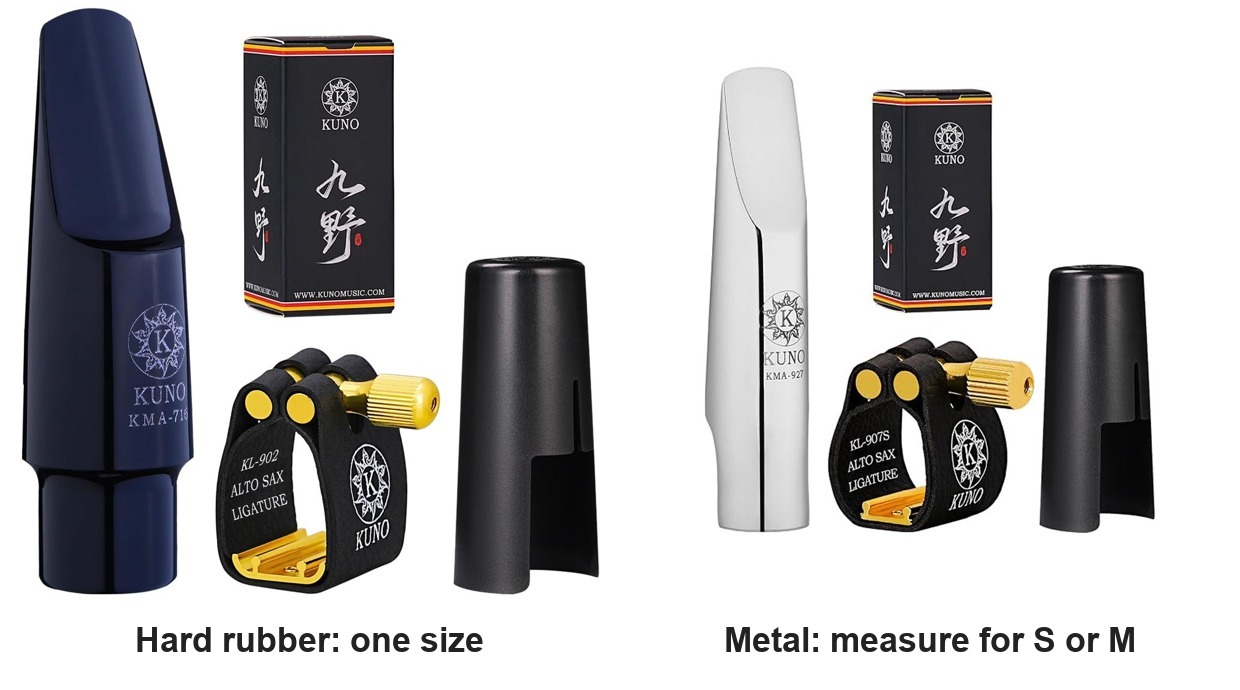
- Hard-rubber (ebonite) or resin mouthpiece: choose the hard-rubber model for your instrument. These are one size and fit standard mouthpieces, so there is nothing to measure.
- Metal mouthpiece: choose S or M by measuring your mouthpiece, as in Step 3. (Exception: the KUNO KL-95 series is one size per instrument with a wider range; see the chart notes below.)
Step 3: Measure your metal mouthpiece
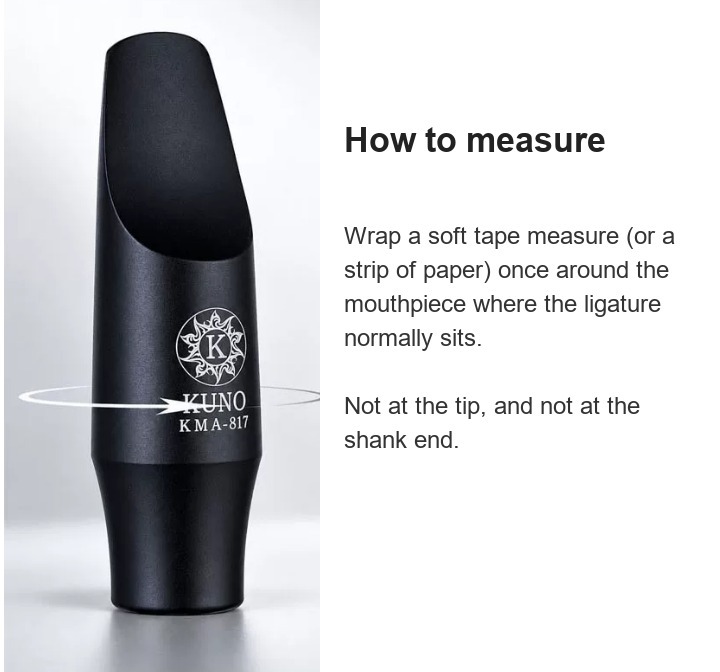
- Wrap a soft tape measure once around the mouthpiece where the ligature normally sits.
- No soft tape? Wrap a strip of paper around the same spot, mark where it overlaps, then lay it flat and measure it with a ruler.
- Don't measure at the tip or at the shank end. Mouthpieces taper, so those spots give a very different number.
- Read the result in millimeters and find it in the chart below.
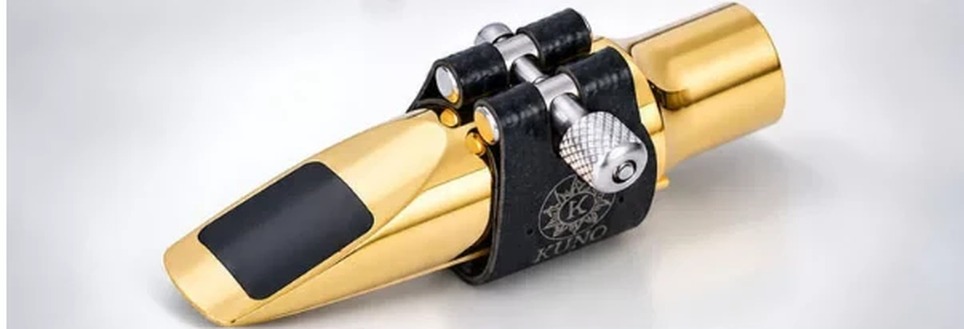
Measure the band of the mouthpiece the ligature wraps around, shown here on a gold metal mouthpiece.
Size chart for metal mouthpieces
| Instrument | S (small) | M (medium) |
|---|---|---|
| Soprano sax | 60-63 mm (2.36-2.48 in) | 63-68 mm (2.48-2.68 in) |
| Alto sax | 66-70 mm (2.60-2.76 in) | 70-74 mm (2.76-2.91 in) |
| Tenor sax | 72-76 mm (2.83-2.99 in) | 76-80 mm (2.99-3.15 in) |
| Baritone sax | 78-82 mm (3.07-3.23 in)* | 82-86 mm (3.23-3.39 in) |
KUNO KL-95 series exception: the KL-95 metal ligatures come in one size per instrument that covers a wider range: soprano 60-68 mm (2.36-2.68 in), alto 66-74 mm (2.60-2.91 in), tenor 70-80 mm (2.76-3.15 in), baritone 72-86 mm (2.83-3.39 in).
* On the KUNO KL-80 and KL-92 series, baritone S covers 76-80 mm (2.99-3.15 in). Each KUNO ligature listing also includes the size guide for its own series in the photos.
Why do metal mouthpieces need S and M?
Two metal mouthpieces for the same saxophone can differ in outer diameter, circumference, cross-section shape and taper. A single ligature can't fit them all securely, so most metal ligatures come in an S and an M for each saxophone size (KUNO's KL-95 series is the exception: one size per instrument with a wider range). For the same reason, caps for metal mouthpieces aren't interchangeable either: pick the cap that matches your mouthpiece size.
Important: the chart is a guide
Circumference is the best single number for choosing a size, but it isn't a guarantee. Two mouthpieces with nearly the same circumference can still fit differently because of their shape, width or taper. If your measurement sits right on the line between S and M, or your mouthpiece has an unusual shape, contact us with its brand and model before you order and we'll help you choose.
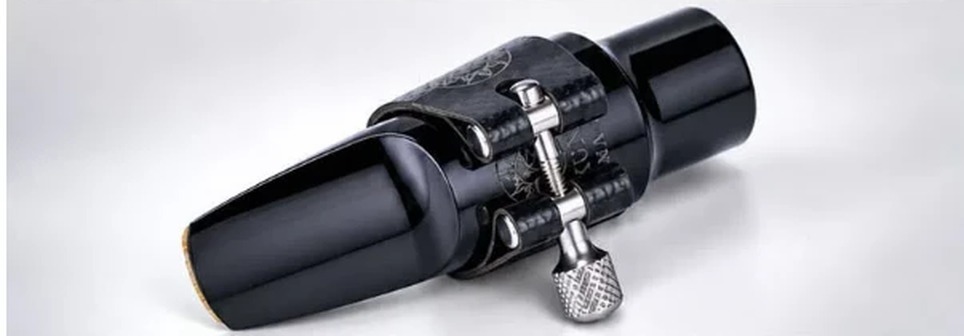
A correctly sized ligature sits snugly and holds the reed evenly.
Before you buy: a quick checklist
- Instrument: soprano, alto, tenor or baritone sax, or Bb clarinet?
- Mouthpiece material: hard rubber or metal?
- Right model: don't choose by looks alone; each instrument has its own model.
- Metal size: measured the circumference where the ligature sits?
- Mouthpiece shape: diameter, shape and taper vary between brands and models.
Bonus: choosing a tone pad
Some KUNO ligatures (the KL-80, KL-92 and KL-95 series) come with three interchangeable pads that sit against the reed. Swap them to change the response:
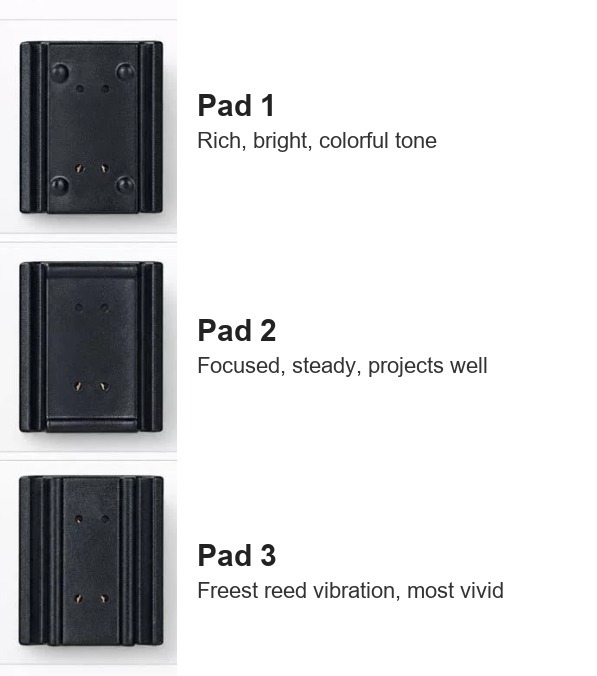
- Pad 1: spreads pressure across the reed for a rich, bright, colorful tone that's easy to play.
- Pad 2: a focused, steady sound that projects well.
- Pad 3: lets the reed vibrate most freely for the most vivid, expressive tone.
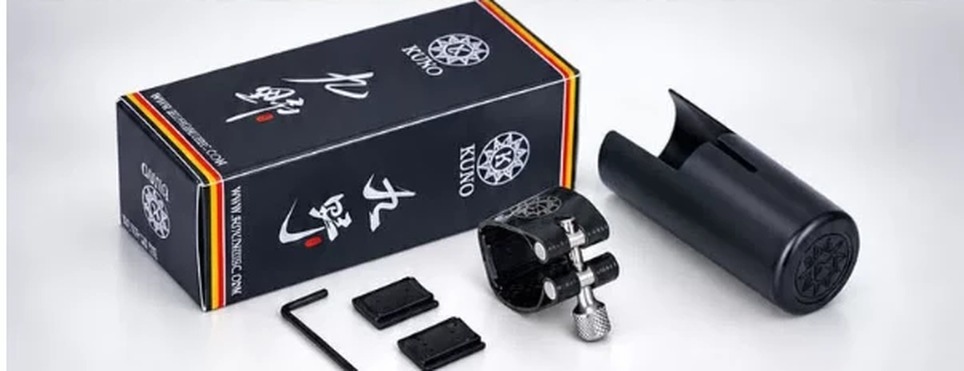
In the KL-80 box: ligature, cap, spare tone pads and a screwdriver for swapping them.
Frequently asked questions
What size ligature do I need for an alto saxophone?
It depends on the mouthpiece material. A hard-rubber alto mouthpiece takes a one-size alto ligature. A metal alto mouthpiece takes size S if it measures 66-70 mm (2.60-2.76 in) around where the ligature sits, or size M for 70-74 mm (2.76-2.91 in). The KUNO KL-95 series is one size for metal alto mouthpieces: 66-74 mm (2.60-2.91 in).
What size ligature do I need for a tenor saxophone?
A hard-rubber tenor mouthpiece takes a one-size tenor ligature. For a metal tenor mouthpiece, choose S for 72-76 mm (2.83-2.99 in) circumference and M for 76-80 mm (2.99-3.15 in). The KUNO KL-95 series is one size for metal tenor mouthpieces: 70-80 mm (2.76-3.15 in).
Will one ligature fit both hard-rubber and metal mouthpieces?
No. Metal mouthpieces are usually slimmer than hard-rubber ones, so ligatures are made separately for each. Choose the hard-rubber model for a rubber or resin mouthpiece, and a metal model (S or M, or the one-size KL-95) for a metal mouthpiece.
Can I use an alto sax ligature on a tenor or soprano sax?
No. Each saxophone size has its own mouthpiece size, so soprano, alto, tenor and baritone ligatures are not interchangeable, and neither are clarinet and saxophone ligatures.
Where exactly do I measure my mouthpiece?
Measure the circumference where the ligature normally sits, over the reed area. Don't measure at the tip or at the shank end: the mouthpiece tapers, so those spots give a different number.
How can I measure my mouthpiece without a soft tape measure?
Wrap a thin strip of paper once around the mouthpiece where the ligature sits, mark where it overlaps, then lay it flat and measure the length to the mark with a ruler. That length is the circumference.
My mouthpiece measures right between S and M. Which should I choose?
Measure again carefully at the ligature position. If it still sits on the boundary, or your mouthpiece has an unusual shape, contact us with the mouthpiece brand and model before ordering and we'll help you choose.
Will a ligature fit my mouthpiece if the circumference matches?
Usually, but not always. Circumference is the best guide, yet mouthpieces with the same circumference can differ in shape, width and taper, which can affect fit.
Can I swap mouthpiece caps between metal mouthpieces?
Not reliably. Because metal mouthpieces differ in size, a cap that fits one may not fit another. Use the cap sized for your mouthpiece, which is why KUNO sells each ligature together with a matching cap.
Does a ligature change the sound of a saxophone?
It can. The ligature controls how the reed is held against the mouthpiece, which affects response and tone. That's why some KUNO ligatures include three interchangeable pads: pad 1 for a rich, bright tone, pad 2 for a focused sound that projects, and pad 3 for the freest reed vibration.